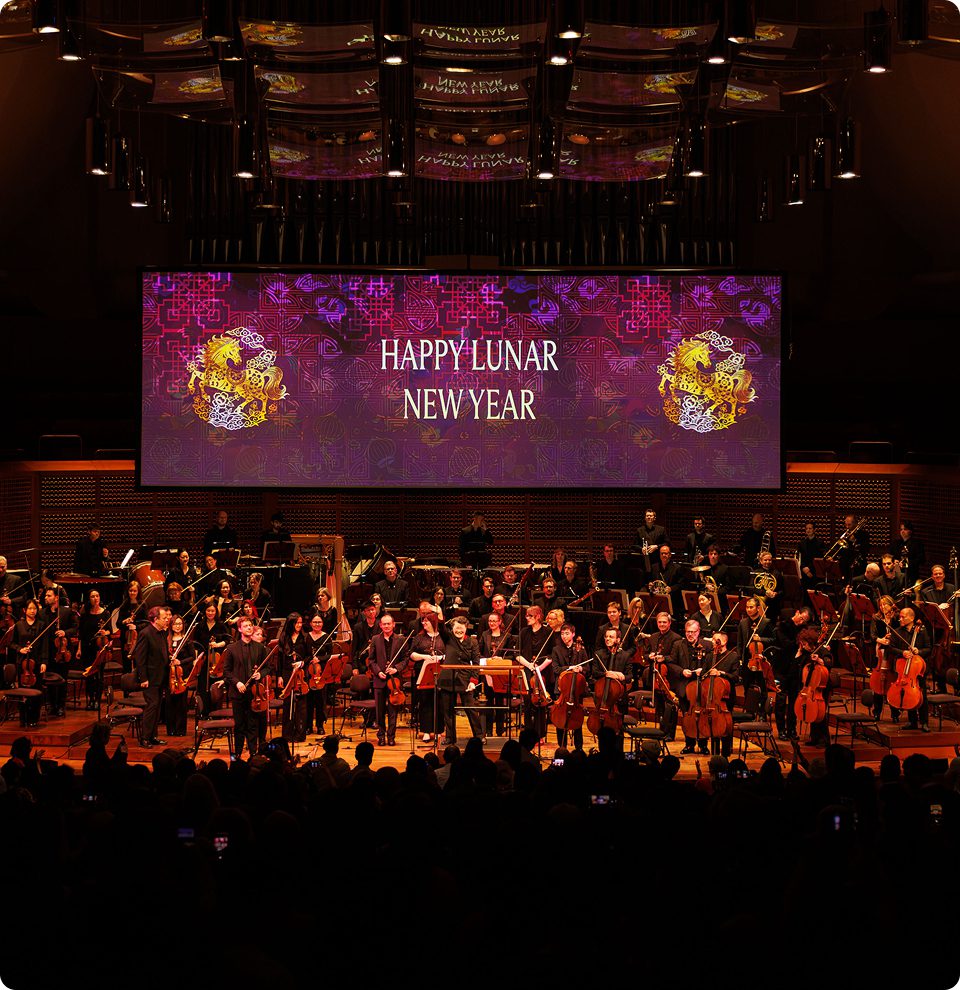
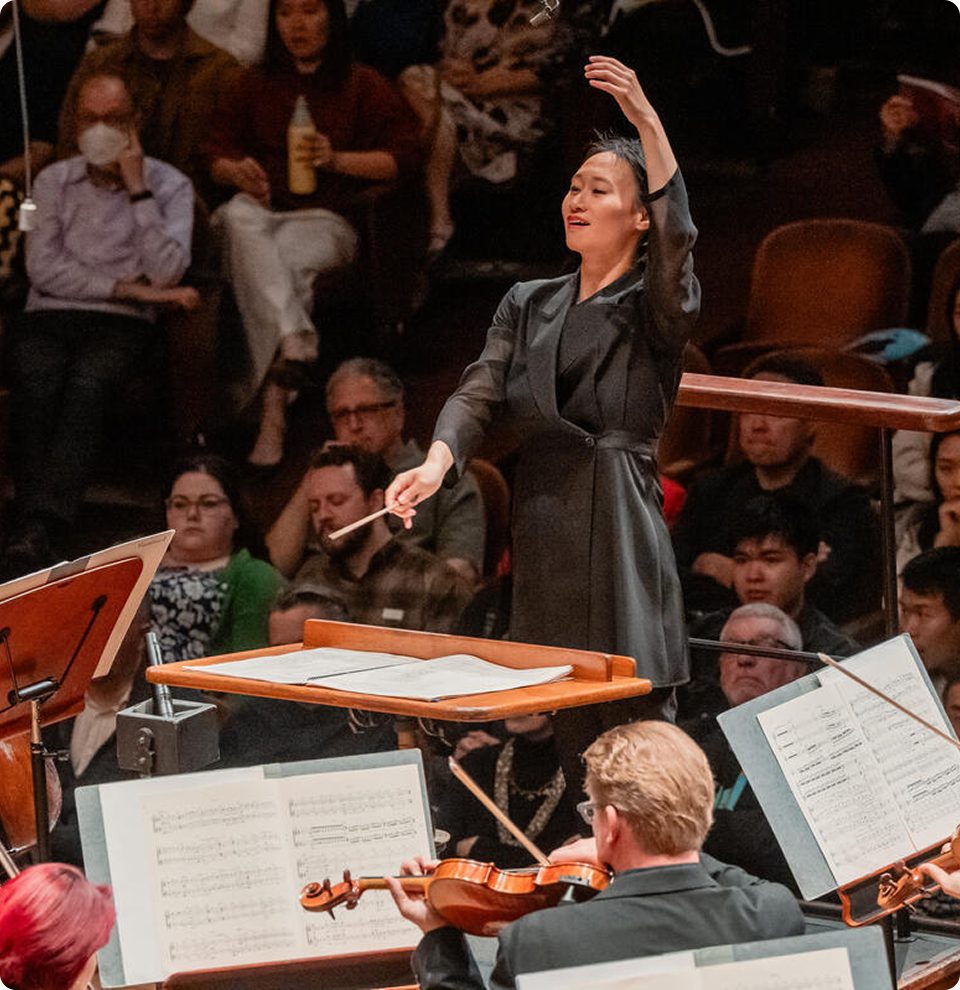
Music carries memory. It carries stories, emotions, and histories that continue to resonate long after the final note. Before a conductor lifts a baton, all of that possibility rests quietly on the page. Then, with a single gesture, it fills the room. Yet for generations, the people entrusted with that role have remained overwhelmingly male. In the United States, only two women currently lead the nation’s top 20 orchestras. Classical Music once observed that a woman was more likely to become the leader of a G7 nation or a four-star officer in the U.S. military than the music director of a major American orchestra.
Women Moving Millions Members Patti-Lee Hoffman and Rosalyn Chen are helping change that. Their investment in the San Francisco Symphony supports women across the artistic pipeline, from guest conductors and emerging soloists to composers, principal musicians, and artist-led performances. By removing financial barriers, their grant gives the Symphony greater flexibility to champion women’s leadership both on stage and behind the scenes.
The impact of those choices extends far beyond a single concert. Symphony orchestras launch careers, expand the classical canon, and influence who sees themselves reflected on stage. Every woman who takes the podium, every commissioned score, and every featured soloist broadens the stories classical music tells and the communities it welcomes.
When Hoffman and Chen made their gifts, the Symphony’s music director position was vacant following the departure of Esa Pekka Salonen. Just a few months later, it announced Elim Chan as its next Music Director, making her the first woman to lead the San Francisco Symphony in its 115-year history. The appointment was independent of the grant, yet it reflects the same aspiration: a future in which women’s leadership on the podium is no longer remarkable because it is no longer rare.
The conductor’s baton is synonymous with authority in classical music, influencing not only how music is performed, but whose artistic vision defines an orchestra. Chan’s selection does not erase the barriers that remain, but it widens the path for those who follow. And investments like this help ensure that the future of orchestral music reflects the fullest range of talent, imagination, and leadership. Because the more voices that help create the music, the more people can hear themselves within it.